Corn Leafhopper Confirmed In Five Missouri Counties
LINDA GEIST
COLUMBIA, MISSOURI
COLUMBIA, Mo. – University of Missouri Extension state field crops and forage entomologist Ivair Valmorbida says corn leafhoppers have been confirmed in five Missouri counties.
Valmorbida’s team of extension specialists found corn leafhoppers on June 16 and June 22 in Boone County, on June 15 in Barton County, on June 22 in Christian County and on July 7 in Lawrence County. Corn leafhoppers also were confirmed in Cooper County on July 7. First detections in 2026 occurred about three weeks earlier than they were found in 2025.
Corn leafhoppers can carry corn stunt pathogens. Research outside of the U.S. has shown that corn plants are most susceptible to infection by corn stunt pathogens during the vegetative growth stages, from emergence (VE) through tasseling (VT). Infection can also happen during reproductive stages. However, significant yield losses are likely to occur if plants are infected before the R1 growth stage.
Host plants
Although they only reproduce on corn, they have been reported on other grass species such as gamagrass and Johnsongrass. They also have been found on alfalfa, triticale and other winter annual weeds, but there is no evidence that these plants serve as feeding hosts for corn leafhoppers.
How to identify
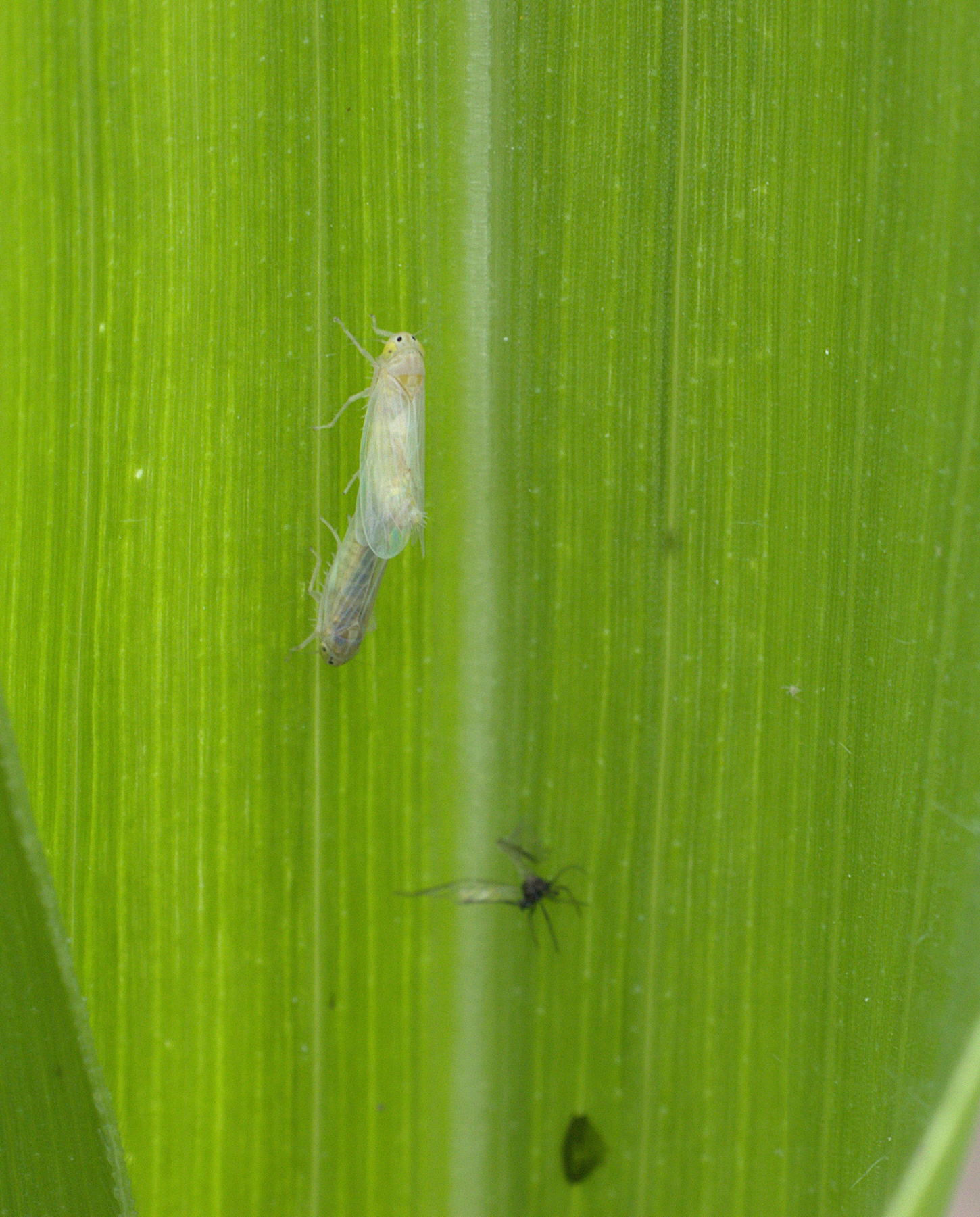
The corn leafhopper is about1/8 inch long – about the size of a grain of rice – with a yellow to tan body color. Adults are characterized by two small black spots surrounded by lighter-colored halos located between the eyes, with no additional markings on the head or body. It is important to note that many leafhopper species also possess two spots between their eyes. But, unlike corn leafhoppers, they will have dark marks on their head and/or face.
While feeding, the pest secretes a honeydew-like substance that favors black, sooty mold. Adults are usually found within the corn whorl and on the underside of corn leaves.
Damage occurs quickly
Corn stunt symptoms appear one to eight weeks after inoculation. The range and severity of corn stunt symptoms can vary, depending on the growth stage when infection occurred, the amount of inoculum present, the corn variety and environmental and weather factors.
Most common symptoms include yellow streaks on the base of infected leaves and yellowing or reddening of leaf tips. Other symptoms can include shortened internodes, small ears, deformed kernels and poor grain filling. Corn stunt can also cause wilting and plant death, leading to significant yield losses.
Damage is great and irreversible
Management is complex, and once plants are infected, damage is irreversible, says Valmorbida. The earlier the infection, the greater the damage.
Valmorbida says it is not yet known if the corn leafhoppers detected in Missouri are carrying corn stunt pathogens. “Growers should assume that any corn leafhopper has the potential to be infectious,” he says.
“Management efforts should focus on early detection and suppression of corn leafhopper populations, particularly in fields with corn at vulnerable vegetative growth stages.”
Scout late-planted corn
“At this time of the year, scout efforts should focus on late-planted corn. If present, an insecticide application may be warranted if corn has not reached the R1 growth stage,” he said.
LINDA GEIST
UNIVERSITY OF MISSOURI
Photos
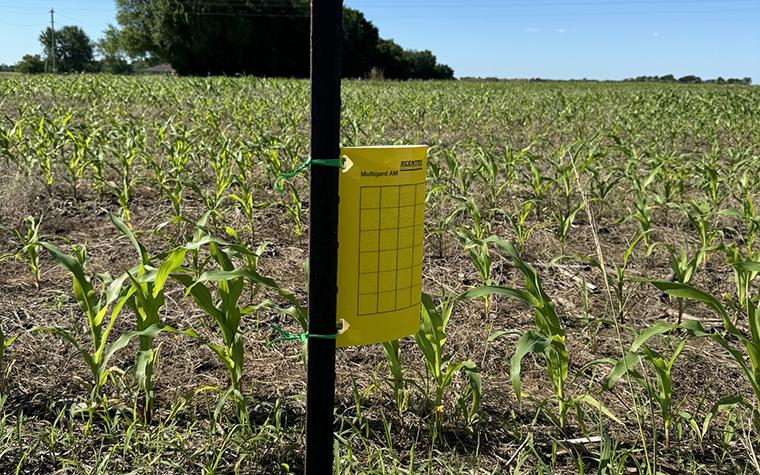
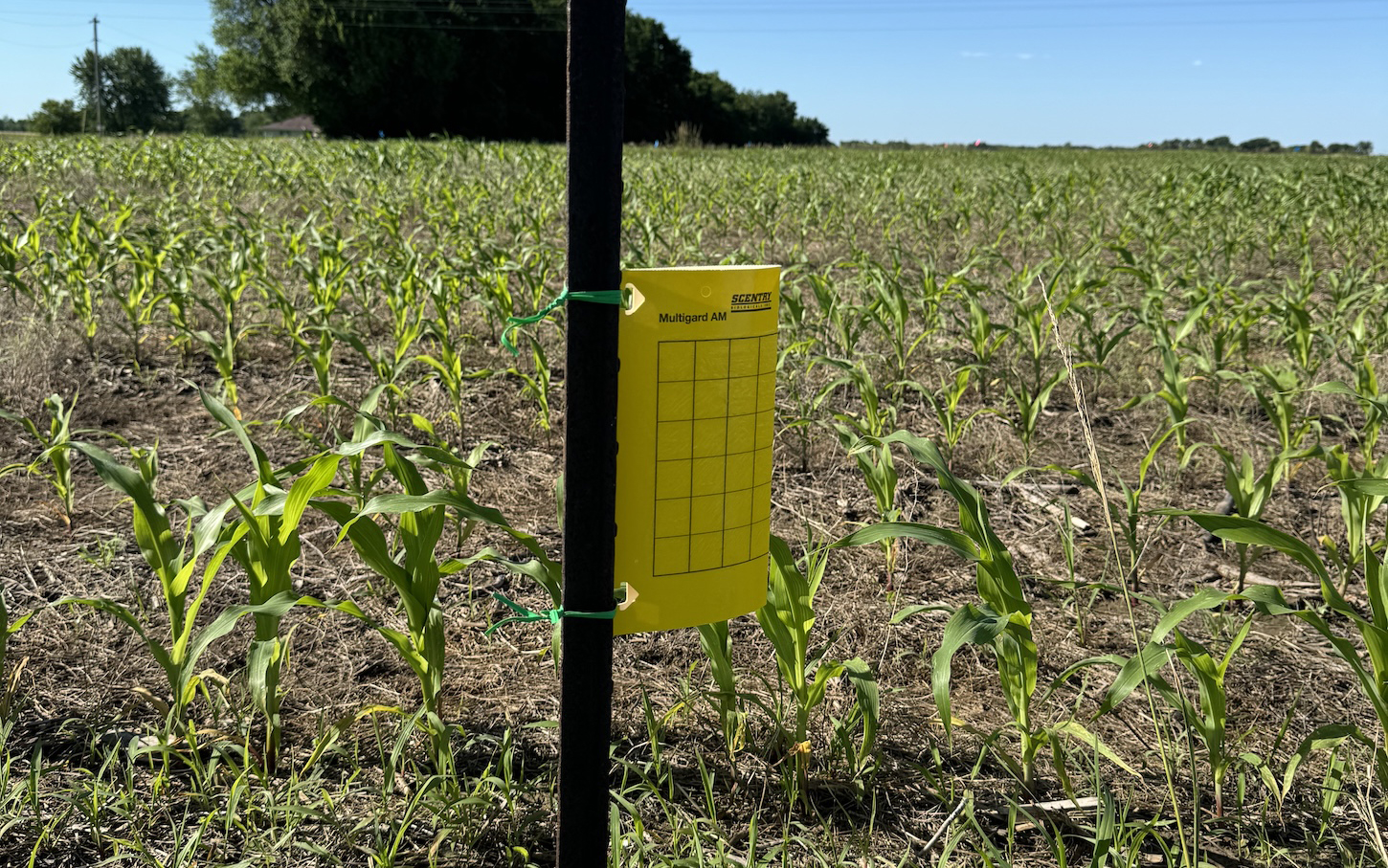
Yellow sticky cards are among the tools used for in-season pest monitoring. MU Extension entomologist Ivair Valmorbida encourages corn growers to scout crops now, especially late-planted corn. Photo courtesy of Ivair Valmorbida.
University of Missouri Extension specialists have confirmed the presence of corn leafhoppers in five Missouri counties.