Corn Earworm Trap Catches Still High: Late-Planted Corn and Tomatoes at Risk
Current Corn Earworm Trapping Numbers
JULIE PETERSON
LEXINGTON, KENTUCKY
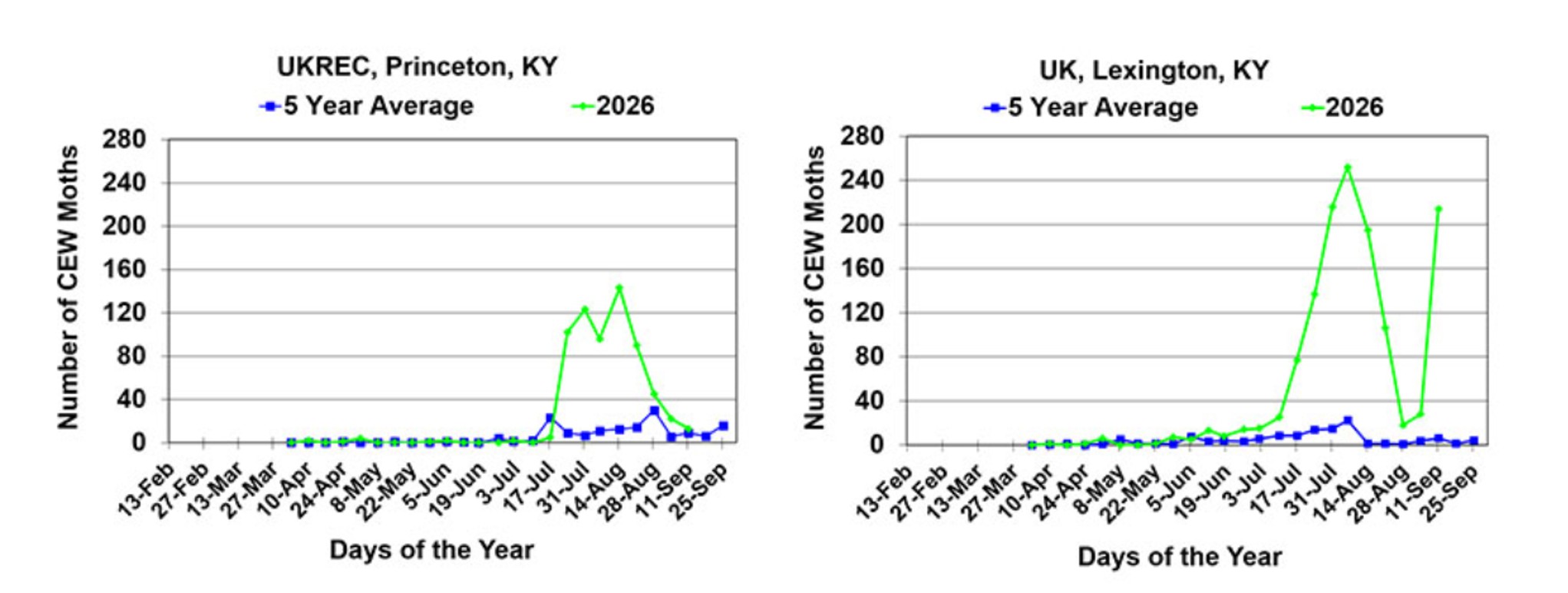
Pheromone trap catches for corn earworm (CEW) moths have risen again in central Kentucky and are well above the 5-year average (Figure 1, Lexington location on the right). In western Kentucky, trap numbers have declined and are now back to average (Figure 1, Princeton location on the left). These elevated trap captures indicate increased moth activity and egg-laying risk for susceptible crops. This late in the season, late-planted sweet corn would be most at risk. CEW moths are attracted to laying their eggs on fresh corn silks, and particularly when late-planted sweet corn is the only source of fresh silks, moths can concentrate their egg-laying here. While corn silks will be preferred, flowering and fruiting tomato plants will also be attractive to CEW moths, and these crops could be at risk as well. While these trap catches alone should not be used for treatment decisions, it is encouraged to look out for this pest in your local area and consider management if needed. For an introduction to CEW and additional information on how to monitor and manage this pest in several key crops, see our August 11, 2026 article in Kentucky Pest News. ∆
JULIE PETERSON
UNIVERSITY OF KENTUCKY
Figure 1. The average corn earworm (CEW) moths collected per week is shown over time for 2026 (green line) compared to the 5-year average (blue line) for both western Kentucky (UKREC in Princeton on the left) and central Kentucky (UK in Lexington on the right). Source: 2026 Corn earworm counts website.
LINK to Original Article : https://kentuckypestnews.wordpress.com/2026/09/15/corn-earworm-trap-catches-still-high-late-planted-corn-and-tomatoes-at-risk/?utm_source=KY+Pest+News+List&utm_campaign=383d10fc18-KPN_NEWSLETTER_EMAIL_CAMPAIGN&utm_medium=email&utm_term=0_bee884adb8-383d10fc18-163945889&ct=t(RSS_EMAIL_CAMPAIGN)